倚天屠龙记
书名:出发吧爱情|作者:笑无语|本书类别:古言|更新时间:14:28:16|字数:3896字
一 |
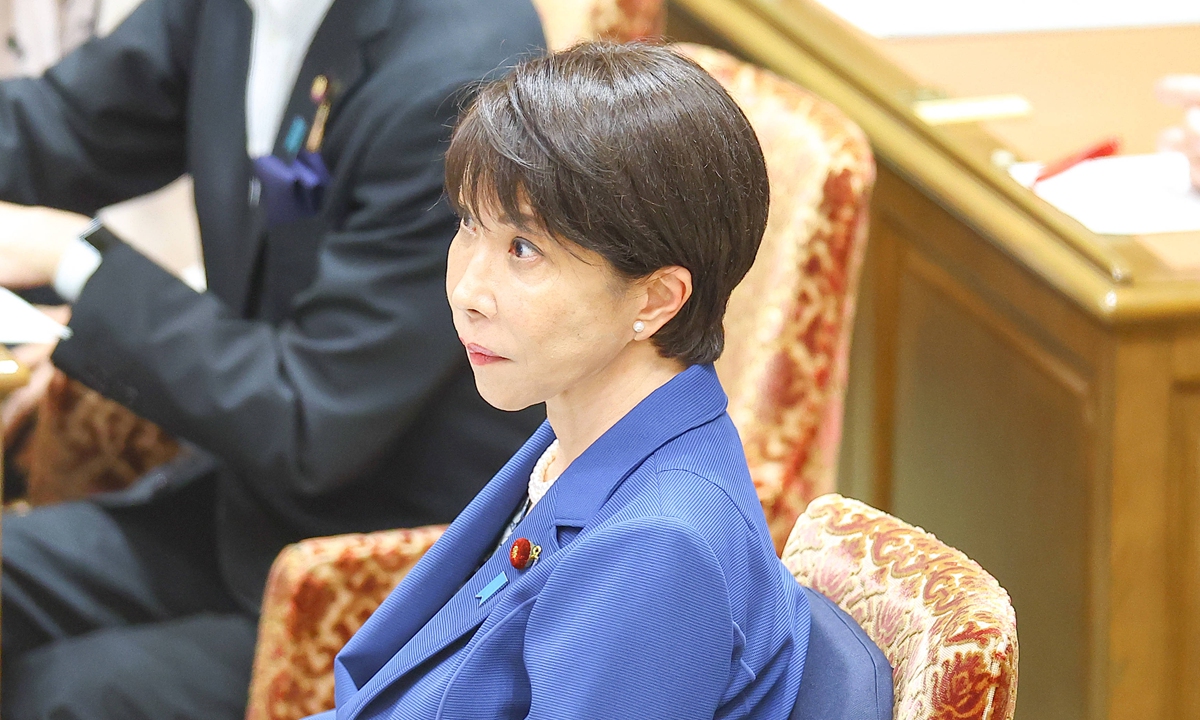
Due to concerns about fueling tension with China and South Korea, Japanese Prime Minister Sanae Takaichi is considering refraining from visiting the notorious Yasukuni Shrine, a symbol of Japanese militarism and wartime aggression, to mark the anniversary of Japan's unconditional surrender in World War II (WWII) on Saturday, Japanese media outlet Kyodo quoted sources familiar with the matter as saying on Wednesday.
Chinese experts said even if Takaichi forgoes a visit to the notorious shrine, the potential decision is merely driven by political calculations and diplomatic maneuvering, and could not be interpreted as a shift in her right-wing stance or as a sign of remorse over Japan's wartime aggression.
Such a visit to the shrine by Takaichi, a conservative known for her hawkish foreign policies, would certainly fuel tensions with China and create a rift in relations with South Korea, two countries that suffered under Japan's wartime military atrocities, Kyodo News reported.
Takaichi regularly visited the shrine before, even while serving as a Cabinet minister. But she has not visited the shrine since becoming leader of the ruling Liberal Democratic Party and prime minister in October, according to Kyodo news.
Chief Cabinet Secretary Minoru Kihara said at a press conference on August 7, when asked about a possible visit by Takaichi to the shrine around the anniversary, that "it is a matter for the prime minister to decide appropriately on her own," according to Japan's Jiji Press.
A source close to Takaichi told the Jiji that, "I don't think the prime minister will visit Yasukuni Shrine. It would complicate relations with South Korea."
Japan's Asahi TV reported that Takaichi may forgo the visit because she believes it is necessary to avoid triggering diplomatic tensions with South Korea, as well as with China.
A visit to the notorious shrine by a sitting Japanese prime minister would be a serious political incident, as it would reflect the leader's attitude toward Japan's wartime aggression and broader historical issues. Even if Takaichi chooses not to visit the shrine, it would not signal a retreat from her right-wing stance or a change in her views of Japan's wartime aggression against other countries, Lü Chao, an expert on Korean Peninsula issues at the Liaoning Academy of Social Sciences, told the Global Times. Rather, he said, the decision would largely reflect political calculations and diplomatic maneuvering.
Lü added that Takaichi could still make other symbolic gestures on the anniversary to cater to Japan's right-wing forces, whose support helped propel her to power. Such a move, he said, would underscore that her views of Japan's wartime history remain unchanged and serve as a reminder to neighboring Asian countries to remain vigilant about Japan's political direction.
Reporting on Takaichi's possible decision to forgo a visit to the shrine, South Korean newspaper Chosun Ilbo said on Wednesday that Takaichi had regularly visited the Yasukuni Shrine. "In the Liberal Democratic Party leadership election held in October last year, Takaichi also said that if appointed prime minister, she would visit the Yasukuni Shrine, noting that such visits should not become a diplomatic issue." However, since then, Takaichi has not visited in person and has only dedicated offerings in a private capacity, per the report.
In April, after Takaichi sent a ritual offering to the notorious Yasukuni Shrine, Chinese foreign ministry spokesperson Guo Jiakun said that China firmly opposes and strongly condemns Japan's latest negative moves related to Yasukuni Shrine and has lodged strong representations and protests with the Japanese side.
The Yasukuni Shrine is a spiritual tool and symbol of Japanese militarists responsible for the war of aggression. It is in fact a shrine for war criminals, noted Guo.
No sitting prime minister has gone to Yasukuni since Japan's late leader Shinzo Abe did so in 2013, drawing strong criticism from neighboring Asian countries.
Beyond Takaichi herself, some Japanese politicians and lawmakers have kept visiting the Yasukuni Shrine, triggering fierce pushback from peace advocates in Japan and the international community, Liu Jiangyong, a professor at the Institute of International Studies of Tsinghua University, told the Global Times, noting that such visits not only reflect the long-standing right-wing stance of Takaichi and other conservative politicians on historical issues, but also lay bare Japan's enduring militarist remnants.
Also in April, members of the conservative solidarity association, a group of conservatives in Japan's Liberal Democratic Party, and 166 Sanseito lawmakers from the Diet and local assemblies visited the Yasukuni war shrine.
In response, Lin Jian, Chinese foreign ministry spokesperson said that China strongly deplores and condemns such acts.
"By visiting the Yasukuni war shrine that honors Japanese Class-A war criminals year after year, these Japanese politicians seek to reverse the just verdict on Japanese aggression, and hereby whitewash Japan's war crimes and revive militarism. The Chinese people and people elsewhere who suffered under Japanese aggression will never accept that, neither will anyone in the world who stand for peace. As Japanese neo-militarism keeps gaining strength, the international community must stay on high alert and stand ready to stamp it out before it could wreak havoc in the region," said Lin.
。 Raaj Kamal Films International marked Rajinikanth’s fifty years in cinema and his seventy-fifth birthday with a heartfelt video tribute that revisits one of Tamil cinema’s most enduring creative partnerships. Shared on the production house’s official social media handles, the video stands as a warm salute from Kamal Haasan and his banner to a fellow icon who has walked alongside him through five decades of cinema.Kamal Haasan and Rajinikanth share a rare bond shaped by time, trust, and mutual respect. They have appeared together in eighteen films, a collaboration that began with Apoorva Ragangal in 1975, which also marked Rajinikanth’s debut as an actor. Over the years, their journeys diverged in style and persona, yet remained deeply intertwined within the history of Tamil cinema. .@RKFI extends heartfelt birthday wishes to @rajinikanth.His friendship with @ikamalhaasan remains one of themost treasured bonds in Indian cinema.#Rajinikanth #KamalHaasan#HappyBirthdayRajinikanth #HappyBirthdayThalaivar @turmericmediaTM @magizhmandram pic.twitter.com/weGvadDQGB — Raaj Kamal Films International (@RKFI) December 12, 2025 A tribute rooted in shared memoriesThe video opens with a still from Ninaithale Inikkum released in 1979, featuring both Kamal Haasan and Rajinikanth. The image itself carries recent significance as it was earlier shared in August ahead of the release of Coolie, instantly sparking nostalgia among fans. From there, the tribute travels back to some of the most formative years of their careers.Several moments from films shaped by legendary filmmaker K Balachandar form the emotional spine of the video. Scenes and stills from Apoorva Ragangal, Moondru Mudichu, and Avargal are featured prominently, reminding viewers of a time when both actors were evolving performers finding their voices under the guidance of a master storyteller. These films remain cornerstones of Tamil cinema, not only for their craft but for the raw energy of two future legends sharing the frame.The video also briefly recreates a moment from Bharathiraja’s 16 Vayathinile through AI generated visuals. The choice adds a modern touch to the tribute while paying homage to a film that redefined realism in Tamil cinema and played a key role in shaping Rajinikanth’s early image as an unconventional performer. Beyond films and into cultural legacyBeyond film clips, the tribute extends into moments captured at public events and celebrations that have become part of Tamil popular culture. Footage from milestones such as Kamal 50 and appearances at the Vikatan Awards highlight the camaraderie between the two stars off screen. These glimpses reflect a relationship that has endured competition, changing eras, and individual superstardom without losing its warmth.Ahead of the video release, Kamal Haasan also took to social media to wish Rajinikanth on his birthday. His message was simple yet deeply personal, acknowledging both the passage of time and the scale of Rajinikanth’s contribution to cinema. He wrote that it marked seventy five years of a remarkable life and fifty years of legendary cinema, signing off with a birthday wish to his friend.The tribute from Raaj Kamal Films is less about spectacle and more about shared history. It reminds audiences that before the myths, the mass moments, and the towering fan followings, Kamal Haasan and Rajinikanth were contemporaries growing together within the same cinematic ecosystem. In celebrating Rajinikanth, the video also quietly celebrates an era of Tamil cinema that shaped generations of storytellers and viewers alike.Also Read: Tamil Cinema Bids Farewell to AVM Saravanan, A Producer Who Shaped Generations。


